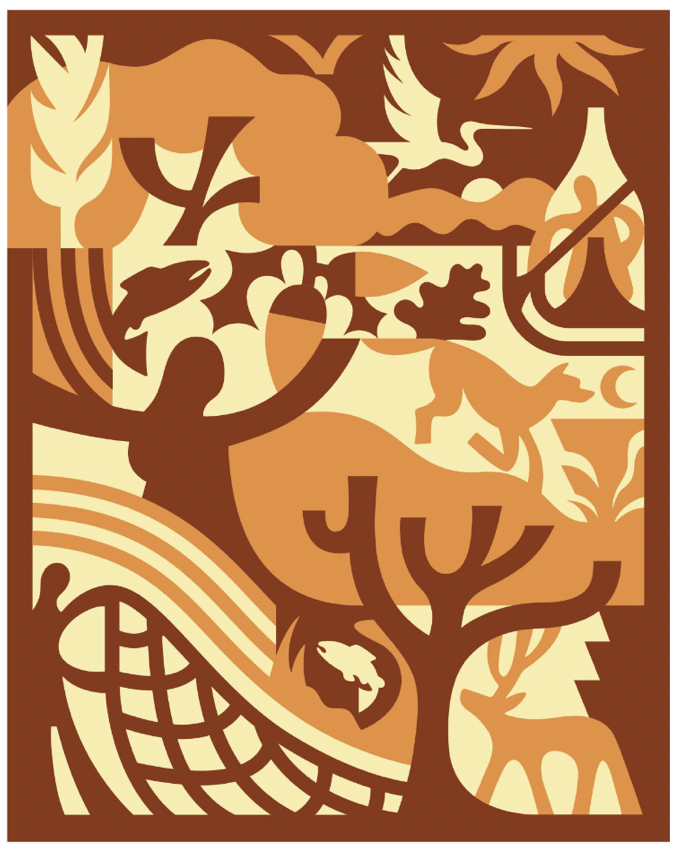
Panel 1 - Honoring the Ohlone and the Pre-European Natural World
Elements found in the panel - Turkey Feather - Live Oak and Valley Oak Trees - Egret Flying - Tule Canoe - Salmon - Live Oak acorns - Valley Oak Leaves - Coyote and Feather - Bay Laurel Tree - Fishing with gillnet - Deer - Chevron Ohlone design
This mural panel is a tribute to the Ohlone people and the vibrant ecosystem that flourished in Mountain View long before European contact. At its heart is the deep relationship between the Ohlone and the land, a connection rooted in respect, sustainability, and cultural richness.
A tule canoe, hand-crafted from native reeds, glides across the water, symbolizing the Ohlone's ingenuity and their connection to the waterways. Nearby, an egret takes flight, a sentinel of the wetlands, while salmon swim upstream, a powerful symbol of renewal and sustenance.
The land is alive with native fauna and flora: a graceful deer pauses among the trees, while a coyote, a creature steeped in Native stories, stands watch, accompanied by a solitary feather, representing spirit and transformation.
Towering live oaks and valley oaks provide shelter and nourishment, their acorns and leaves scattered across the forest floor. The aromatic bay laurel tree adds to the rich biodiversity, anchoring the scene in place and memory.
A turkey feather, used in regalia and ceremony and the geometric rhythm of a traditional Chevron Ohlone design, offering a visual reminder of the tribe's deep artistic and symbolic traditions. The panel also depicts a moment of ancestral wisdom: fishing with a gillnet, a traditional practice passed down through generations, emphasizing skill, sustainability, and reverence for nature. Together, these elements create a visual narrative of life before European colonization: a thriving, interconnected world where every tree, animal, and tradition had a purpose, and a place.
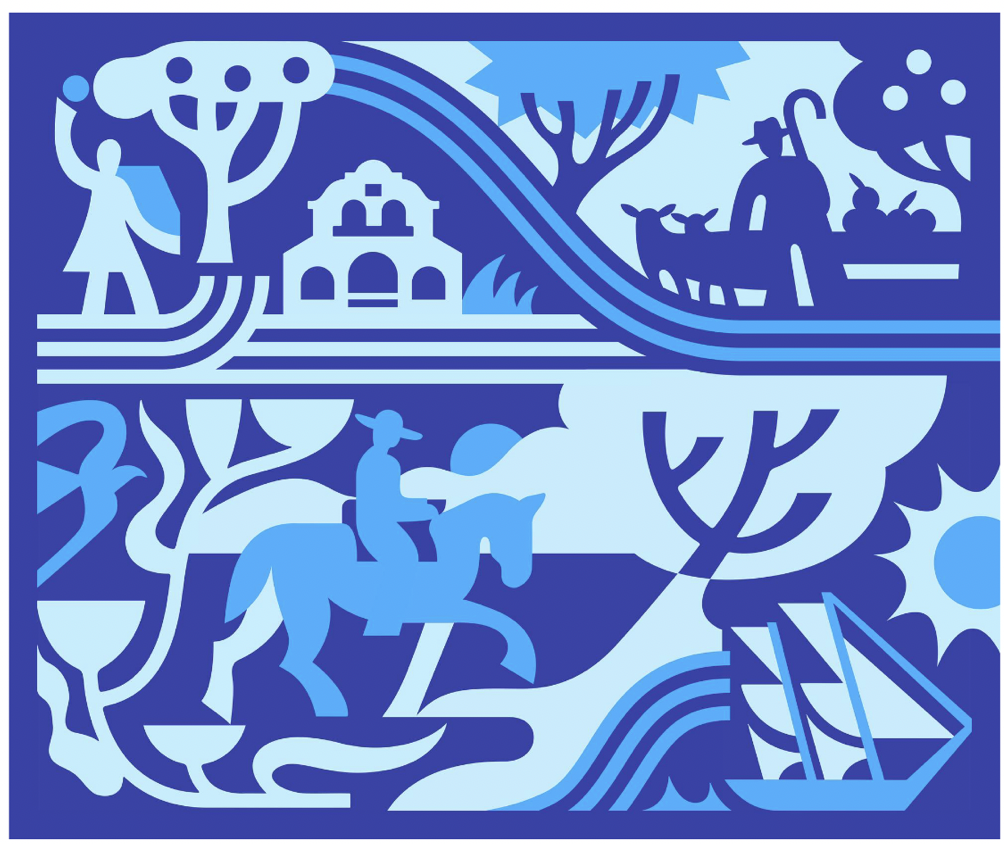
Panel 2 - Mexican Era - Transitions and Traditions
Elements found in the panel - Apricot and plum tree, Early Settlement - Villa Francisca, - Rancho Posolmi (Ohlone) shepherd - Sheep and Fruit Trees - Tern and Flowers - Early Spanish traveler on horseback - Trading/Transport sailing vessel
This mural panel captures a transformative chapter in the region's history, the Spanish and Mexican era, when early European settlers arrived, missions were established, and the landscape began to shift. Yet woven throughout this period is the enduring presence of the Ohlone people, whose knowledge and labor shaped much of this evolving world.
A Rancho Pastoria de las Borregas shepherd, representing Ohlone men who worked the land under Mexican land grants, tends to a small flock of sheep, their wool essential to the growing rancho economy. Nearby, neat rows of apricot and plum trees, introduced by early settlers, flourish in the sun, symbolizing agricultural transformation and the blending of cultures.
In the distance, Villa Francisca, the home of the Castro family, represents their Mexican-era rancho and contributions to Mountain View's earliest era of development. A Californio traveler on horseback, outfitted for long journeys, rides along a dirt path, his presence marking the movement of people, ideas, and goods through the region.
A graceful tern soars above native flowers, symbolizing continuity and migration, both human and ecological. On the horizon, a trading and transport sailing vessel anchors the scene, reflecting the growing maritime trade that connected California to the wider world. This panel tells a story of adaptation, cultural blending, and the enduring role of the Ohlone people, whose labor, land, and legacy remain foundational, even as new chapters began to unfold.
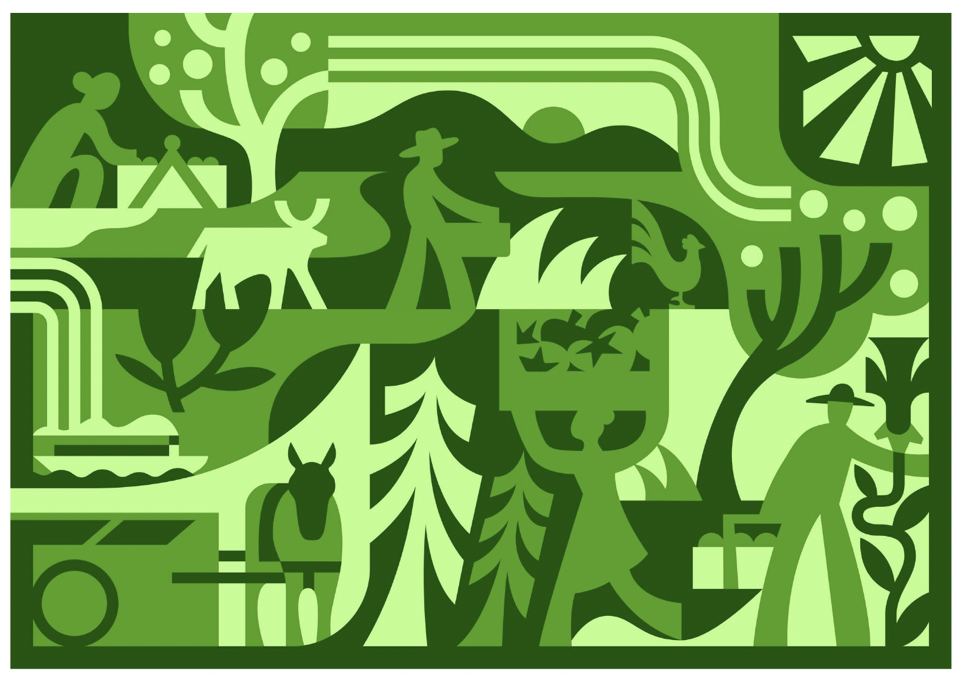
Panel 3 - Early American Agriculture - Growth, Labor, and Landscape
Elements found in the panel - Japanese American female Fruit Picker - Santa Cruz Mountains - Sunshine, Agriculture Climate - Cattle - Fieldworker - Chicken - Fruit Trees - Steam Trade Ship - Strawberry Pickers and Horse Carriage transport
This mural panel celebrates the rise of agriculture in the early American era, a time when the land's abundance met waves of new labor and innovation. Framed by the Santa Cruz Mountains and bathed in sunlight, the region's temperate climate made it ideal for fruit orchards, ranching, and fertile fields.
At the heart of this panel is the contribution of Japanese American women who picked strawberries, their labor and perseverance helped transform the area into a thriving hub of fruit production, even in the face of discrimination and hardship. Nearby, a female fieldworker tends to strawberry rows, while a horse-drawn carriage waits to transport crates of harvest, marking the rhythm of rural life.
Fruit trees, heavy with seasonal bounty, stretch across the landscape, joined by grazing cattle and the cluck of chickens in the background, symbols of small-scale farming and sustenance.
Offshore, a steam trade ship cuts through the water, connecting local harvests to broader markets and underscoring the growing role of trade in the region's agricultural economy.
Together, these elements tell a story of labor, community, and natural abundance, an era shaped by the hands of many and the promise of the land.
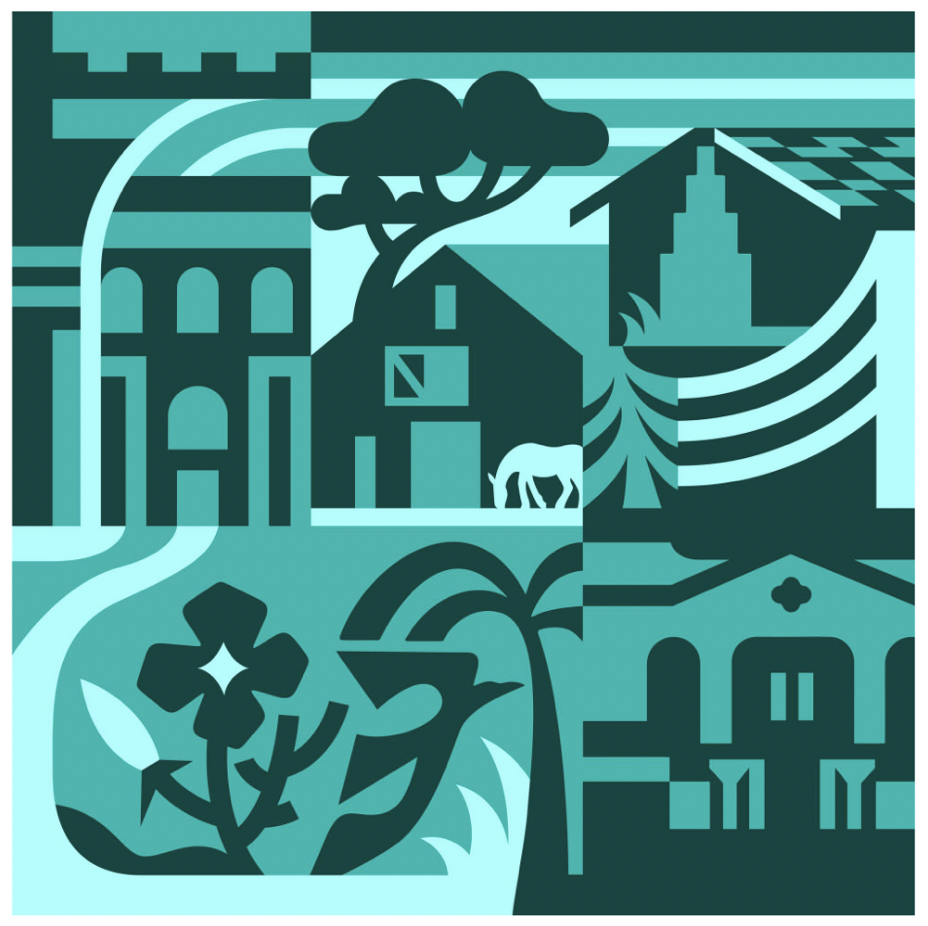
Panel 4 - Historic Mountain View Landmarks - Roots of a Growing City
Elements found in the panel - Farmers and Merchants Bank - Livery & Feed Stable - Adobe House - 1909 City Hall - Sycamore Tree, Poppy, Raven and Palm Tree
This mural panel honors the foundational landmarks and natural icons that shaped early Mountain View, capturing a time when the city was transforming from a rural settlement into a vibrant community.
The Farmers and Merchants Bank stands tall, representing early economic growth and the rise of local commerce. Not far from it, the Livery & Feed Stable recalls a time when horses powered daily life, serving travelers, farmers, and townsfolk alike.
The Adobe Building, built as a New Deal project in the midst of the Great Depression, is Mountain View's first community center and stands as an enduring symbol of the communal
Nearby, the 1909 City Hall, with its distinct civic presence, marks the town's commitment to governance, structure, and identity as it grew into a bustling municipality.
Nature weaves through this historic scene: a towering sycamore tree offers shade and longevity, while poppies, California's state flower, bloom brightly at its base. A watchful raven, often seen as a symbol of transformation and intelligence, perches nearby, and a palm tree adds a touch of California flair, standing tall against the skyline, just as it did in old photographs of the city's early streets.
Together, these elements reflect the spirit and resilience of Mountain View's past, a community grounded in hard work, natural beauty, and an enduring sense of place.
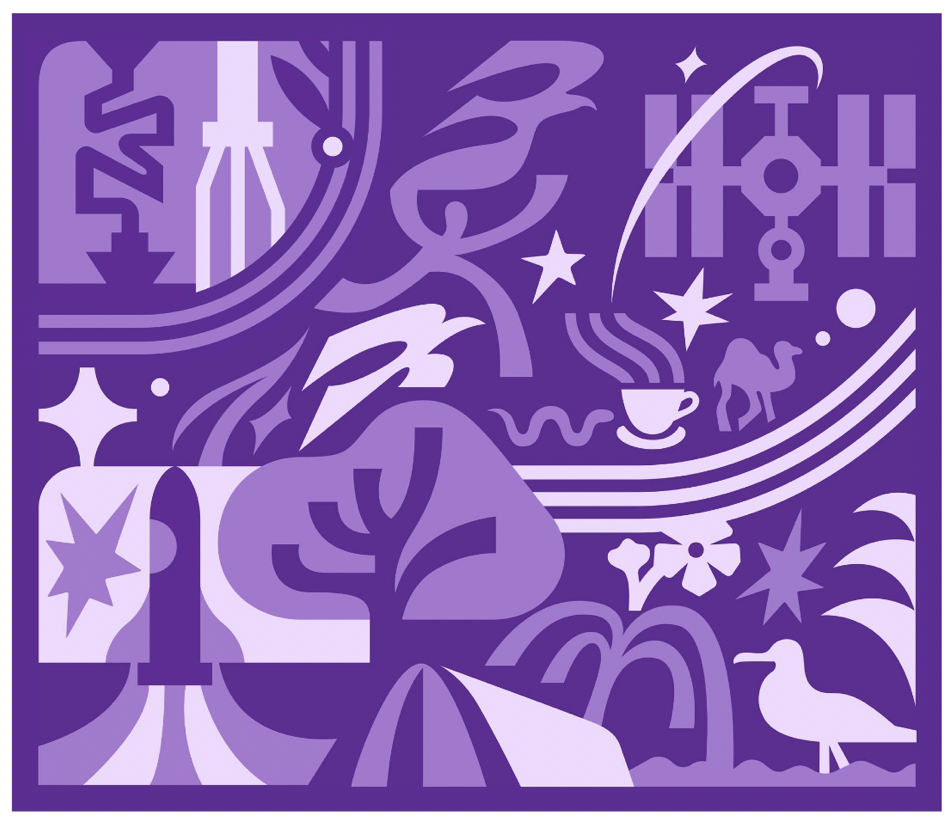
Panel 5 - Technology and Innovation
Elements found in the panel - Original Transistor Invention and integrated circuit - Circuitry - Person and Birds in the stars - International Space Station - Coding Languages (Python, Java, Perl) - Nasa Space Shuttle - Moffett/Hangar One
This mural panel celebrates Mountain View as a hub of innovation, where breakthroughs in science, space, and software have helped shape the modern world.
The journey begins with Shockley Semiconductor, the first high tech company in Mountain View. A transistor and intricate circuitry flow through the design like a living network, symbolizing the evolution of technology and its expanding reach.
Floating through this universe of innovation is a human silhouette, a person and birds among the stars, reminding us that imagination and exploration are at the heart of every discovery.
Above, the International Space Station and a NASA Space Shuttle reflect NASA Ames and Mountain View's deep ties to aerospace and exploration, while the iconic Hangar One at Moffett Field anchors the scene to its local roots, a historic structure that has witnessed decades of scientific progress.
Threaded through the mural are the icons of key coding languages, Python, Java, and Perl, representing the software revolutions born in the Silicon Valley ecosystem, with Mountain View as a critical player in that story.
Together, these elements form a constellation of creativity, precision, and wonder, honoring Mountain View's role not only as a birthplace of invention but as a gateway to the future.
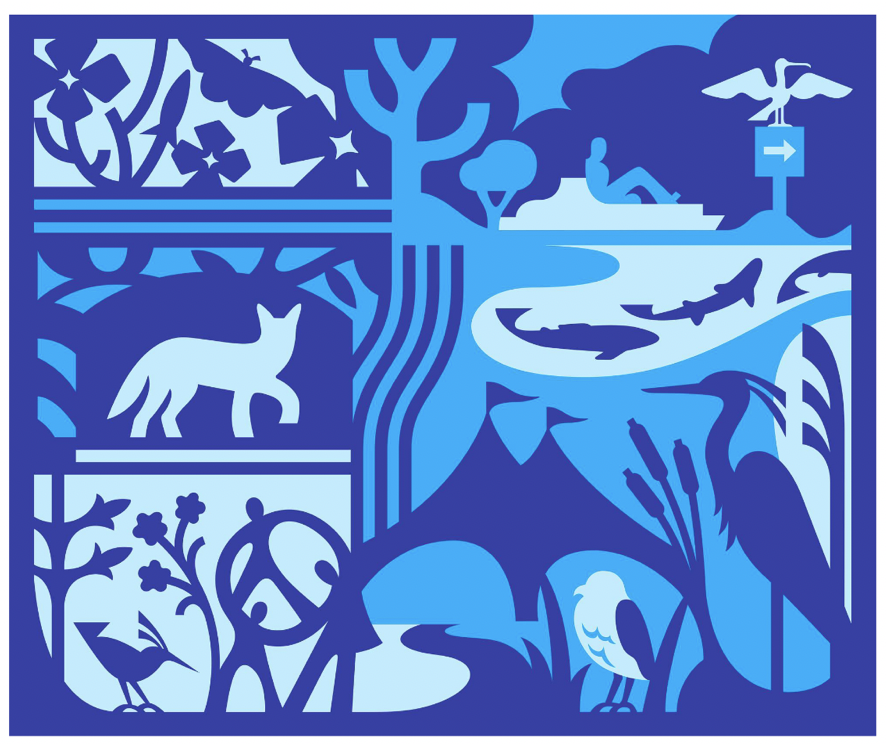
Panel 6 - Shoreline and Stevens Creek - Where Nature and Community Meet
Elements found in the panel - Bay Checkerspot flying around Poppies - Pedal Boat at Shoreline Sailing Lake - Cormorant sunning - Coyote crossing Stevens Creek walkway bridge - Steelhead Trout in Stevens Creek - Black Crowned Night Heron in Wildflowers - Family at Shoreline park - Burrow Owl - Amphitheater - Great Blue Heron
This mural panel celebrates the vibrant ecosystems and shared spaces of Shoreline and Stevens Creek, where wildlife, water, and community intertwine in the heart of Mountain View.
In the foreground, an endemic and endangered Bay Checkerspot butterfly flutters among blooming California poppies, a symbol of resilience and biodiversity unique to the region. Nearby, a Black-crowned Night Heron perches gracefully in a bed of wildflowers, while a Great Blue Heron and cormorant bask and sun along the shoreline, embodying the peaceful rhythm of this restored wetland.
Stevens Creek winds through the mural as it connects the baylands to the foothills. The creek is clear and life-giving, home to the shimmering presence of a native steelhead trout. A coyote pauses mid-step on the walkway bridge, a quiet reminder of the wild edges that remain deeply connected to this urban sanctuary.
At the Shoreline Sailing Lake, a pedal boat glides gently across the water, and a family enjoys the open space of Shoreline Park, where recreation and renewal come together under wide, open skies.
Standing watch nearby is the small yet iconic burrowing owl, a beloved and protected species that calls this area home. In the background, the architectural curves of the Shoreline Amphitheatre rise, connecting nature to music, people, and culture in a uniquely Mountain View way.
Together, this mural honors the delicate balance between habitat and humanity, a place where wildlife thrives, families gather, and nature is both protected and celebrated.
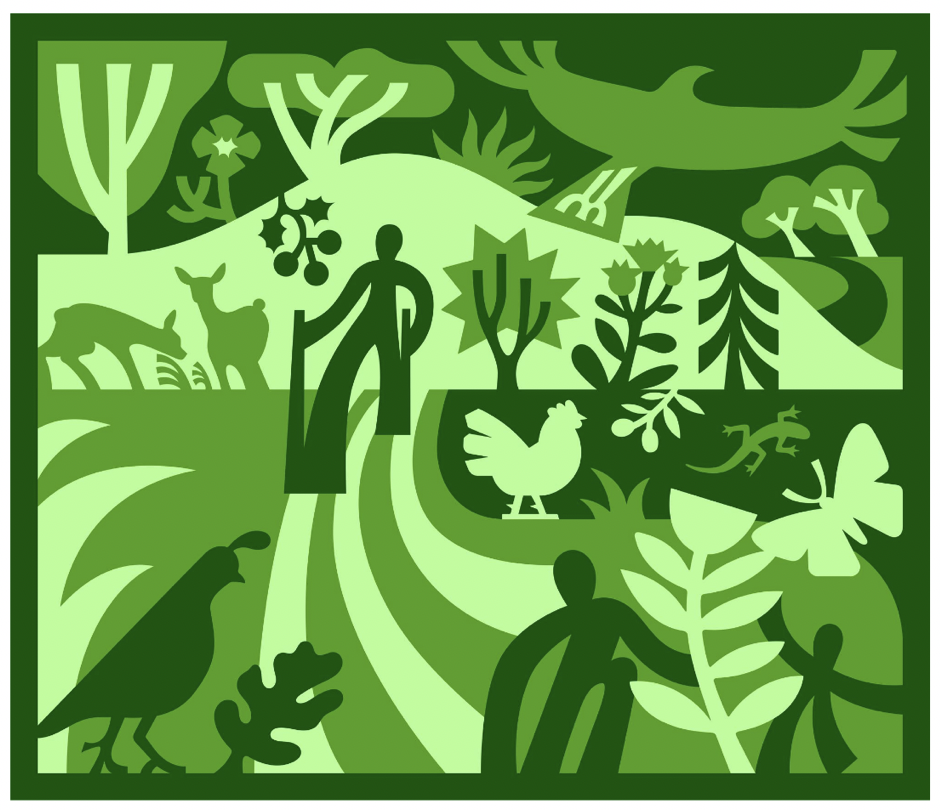
Panel 7: Foothills and Stevens Creek - Nature's Living Tapestry
Elements found in the panel - Cottonwood - Poppy - Bay Laurel - Red-Tailed Hawk - Deer - Holly Leaf Cherry - Hiker - Coyote Bush and Flower - Arroyo Willow - Chickens from Deer Hollow Farm - California Newt - Monarch Butterfly - Quail and Valley Oak Leaf - Family interacting with nature
This mural panel celebrates the vibrant life found on the Stevens Creek trail and it's namesake Stevens Creek that actually connects the baylands to the foothills, a landscape where native plants, animals, and people coexist in harmony across rolling hills, shaded canyons, and winding trails.
Majestic cottonwood, bay laurel, and arroyo willow trees provide shelter and shade, while poppies, coyote bush flowers, and holly leaf cherry dot the scene with seasonal color and nourishment for pollinators and wildlife. A branch of valley oak, with its signature leaf, anchors the mural in California's rich oak woodland heritage.
A red-tailed hawk circles overhead, scanning the golden hills, while a quail scurries below, California's state bird, ever watchful. In the underbrush, a California newt makes its way across the trail, and a delicate monarch butterfly drifts through the air, a living symbol of migration and transformation.
A deer stands quietly among the trees, blending into the landscape, while chickens from Deer Hollow Farm add a touch of rustic life, connecting today's families to the region's agricultural past.
A hiker explores Rancho San Antonio, part of a family interacting with nature, pausing to observe, to wonder, and to feel part of something larger. Whether it's the call of a bird, the rustle of leaves, or the sight of a coyote slipping into the brush, this mural honors the quiet magic of everyday encounters with the natural world. From the bayshore to the foothill's nature is shared, lived, and deeply cherished.
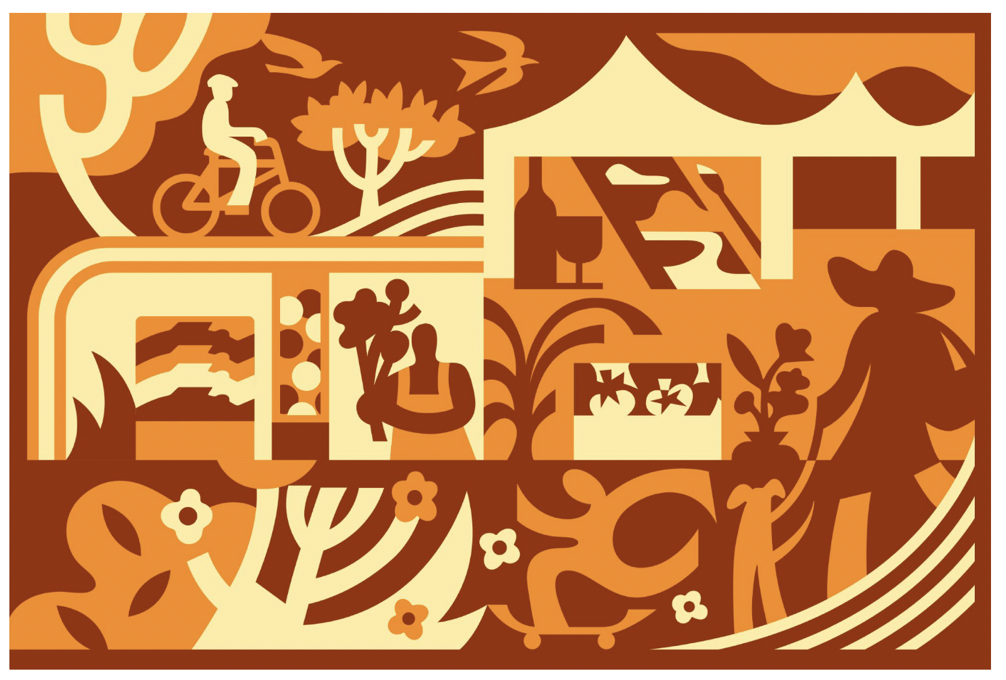
Panel 8 - Present Day Mountain View - A Community in Motion
Elements found in the panel - Bicyclist riding in town - Toyon - Art and Wine Festival - Farmer's Market (Seafood, Fruit, Flowers) - Flannel Bush and flowers - Skateboarder - Dog Walker
This mural panel captures the energy, color, and connection of Mountain View today, a city where nature, culture, and community come together in daily rhythms of life.
A bicyclist rides through town, reflecting Mountain View's commitment to sustainability, healthy living, and accessible streets.
Nearby, a skateboarder glides along the path, and a dog walker strolls with a loyal companion, capturing the friendly, active spirit of the community.
The mural blossoms with native plants like Toyon, with its bright red berries, and flannel bush, glowing with vibrant yellow flowers, reminders of the region's natural beauty woven into urban life.
At the heart of the scene, the Mountain View Farmers' Market bursts with fresh seafood, colorful fruit, and flowers, showcasing local abundance and a love for good food and gathering.
Festive banners hint at the city's beloved Art and Wine Festival, where creativity flows as freely as conversation, bringing neighbors together to celebrate local artists, makers, and music under the California sun. In this mural, everyday moments become symbols of a thriving, inclusive city, where people connect with each other, with nature, and with the rhythm of modern life in Mountain View.